
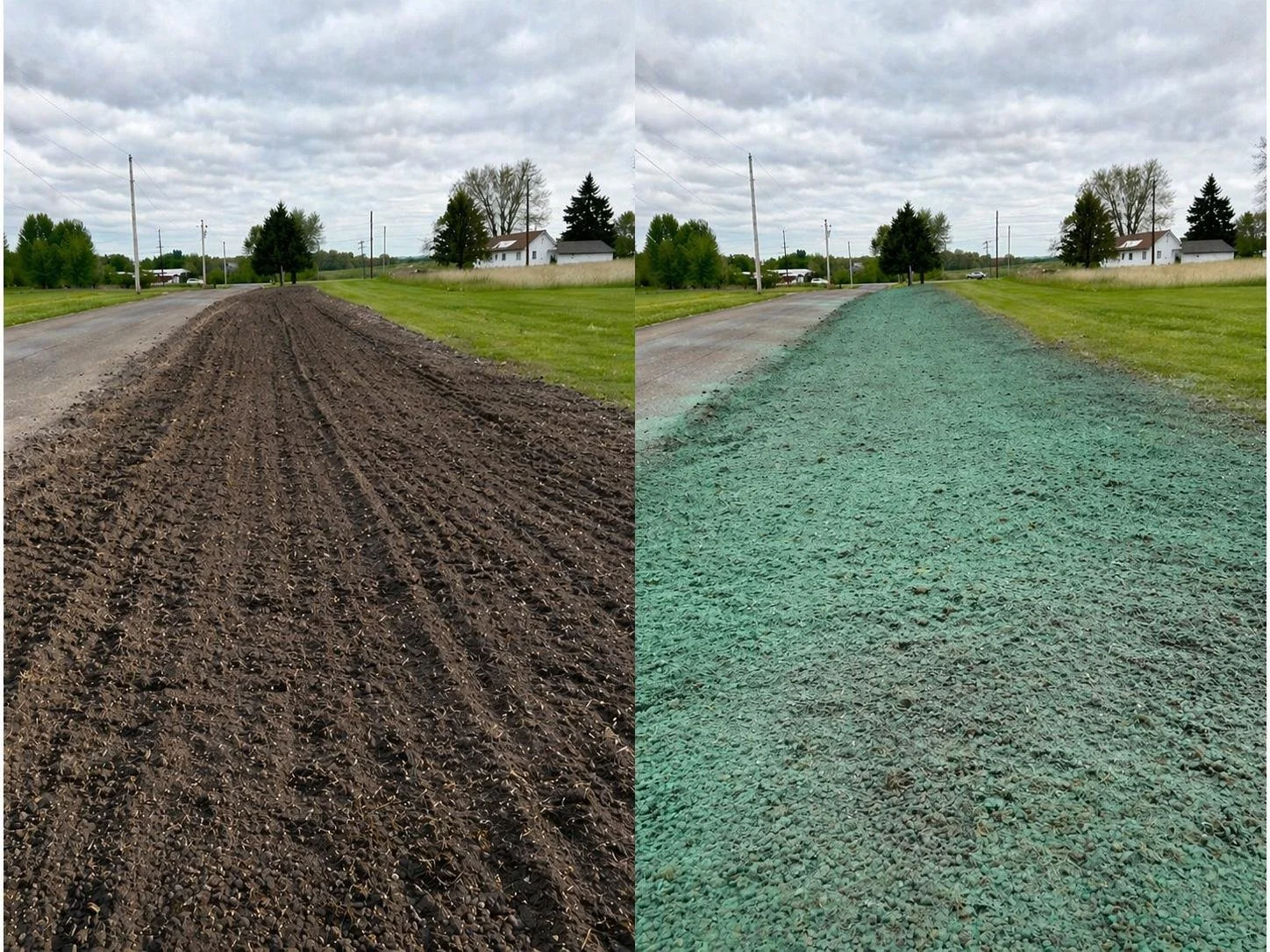
My yard is hydroseeded… now what?
PHASE 1: ESTABLISHMENT
During the establishment phase the top couple inches of soil must be damp. A quick way to check is simply by sticking a finger in the ground. If it is moist, then you’re doing a good job. If it is dry, increase your watering. (It is very rare that a person can apply too much water.) To start, try watering first thing in the morning, ensuring that every area receives 20 minutes of sprinkler coverage.
When the seedlings are 1” tall you may begin to reduce the frequency of watering to two or three times a week. In the very hot summer, daily watering will likely be required. Reduce or discontinue watering during wet and/or cool periods.
Important note! When it comes to watering, fewer sessions but longer in length is more effective than more sessions but shorter in length. The aim is to not just get the hydroseed wet, but to also dampen the ground under the hydroseed.
PHASE 2: MOW and FERTILIZE
A new lawn should be mowed as soon as the grass blades are 2" to 3" high. Mowing plays a vital role in controlling the weeds, giving the grass the opportunity to establish dominance. Subsequent mowing should be done every week. If the grass gets too tall (4+ inches) before it is mowed, raise the mower deck. Cutting off more than one third of a young plant’s growth can be detrimental.
The new grass will need an application of balanced fertilizer after the first mow and again 45 days later using the rates recommended on the bag. Apply fertilizer on the lawn area when it is dry and then water thoroughly. Use a standard lawn fertilizer available at almost any home improvement supply store (example NPK numbers: 14, 14, 14)
Important note! A lawn should be well-established before using a fertilizer with a weed killer. Grass should be at least 4-6 weeks old and have been cut 4+ times before using a weed killer of any sort.
PHASE 3: BEST PRACTICES in seasons to come
One of the best practices you can establish for your lawn is regular overseeding. This is especially important for young lawns in the first year. The introduction of additional grass seeds will help your lawn look more full and help control weed growth. The best defense against weeds is a robust and thick stand of grass. While a slicing overseeder works best even a broadcast spreader makes a noticeable difference.
Help fight soil compaction by aerating once a year. Fall is a popular time to aerate and can be completed by the homeowner or hired out by a professional service. This is an inexpensive way to encourage root growth and water intake - both essential for a healthy, low maintenance lawn.